

By Rocky Catala, Payments & Membership Growth Strategist
Date Published: November 30, 2025
This question sits at the center of every growing academy. Owners push for alignment and predictable performance, yet expansion often exposes gaps fast. The pressure increases the moment a second location opens. The need for staff training across locations becomes non-negotiable. Without it, operations drift and results weaken.
Multi-location owners face a simple truth. Training breaks down when each school forms its own habits. One Taekwondo location runs disciplined lessons. Another slips into casual pacing. A Judo school follows structured intros while another lets instructors improvise.
Eventually, students sense inconsistencies. Parents compare experiences. Confidence fades. Because of these gaps, owners begin to notice that performance problems stem from a lack of shared expectations.
A regional Karate group faced this exact issue. The main school set the standard with efficient class flow. However, the second location drifted. Warm-ups lagged, drills stretched too long, and retention suffered. After reviewing operations, the owner realized talent wasn’t the issue. The absence of unified training was.
Students stay when expectations remain clear. Parents commit when the experience is predictable. Strong staff training across locations creates this stability. When instructors follow shared standards, your brand delivers a uniform product.
A BJJ academy with four sites learned this the hard way. One location was run by purple belts. Another by brown belts. Class structure shifted from school to school. Over time, students felt uneven instruction. Once the owner implemented unified training protocols, everything changed. Class flow improved, the mat culture stabilized, and retention increased across all locations.
Consistent training strengthens value, reinforces culture, and protects the student journey.
Systems create uniformity. They eliminate guesswork. More importantly, they keep all locations aligned even when leaders are not on-site.
Weekly rhythms set the pace. For example, a growing MMA franchise used short Monday huddles to create alignment. Every school followed the same agenda. Curriculum goals were reviewed. Performance trends were discussed. Safety and communication protocols were reinforced. These meetings improved execution at every location.
Because the meetings stayed simple and predictable. Instructors never drifted far from the standard.
KPIs give instructors clarity. They define what success looks like without emotional interpretation. Enrollment conversions, class energy, parent engagement, and attendance follow-up all provide measurable signals.
A Kickboxing chain used KPIs to sharpen instructor growth. Coaches reviewed their numbers every week. Leaders then coached based on facts instead of opinions. As a result, training became precise and aligned with operational priorities.
Real case studies reveal consistent patterns.
A Taekwondo organization with six locations standardized onboarding. New instructors followed a clear pathway of shadowing, co-teaching, and technique standards. After implementation, quality improved across the board.
A Karate dojo unified its curriculum using weekly video reviews. Instructors recorded demos for leadership to evaluate. Feedback was direct, respectful, and focused on fundamentals. Students soon experienced consistent instruction across all sites.
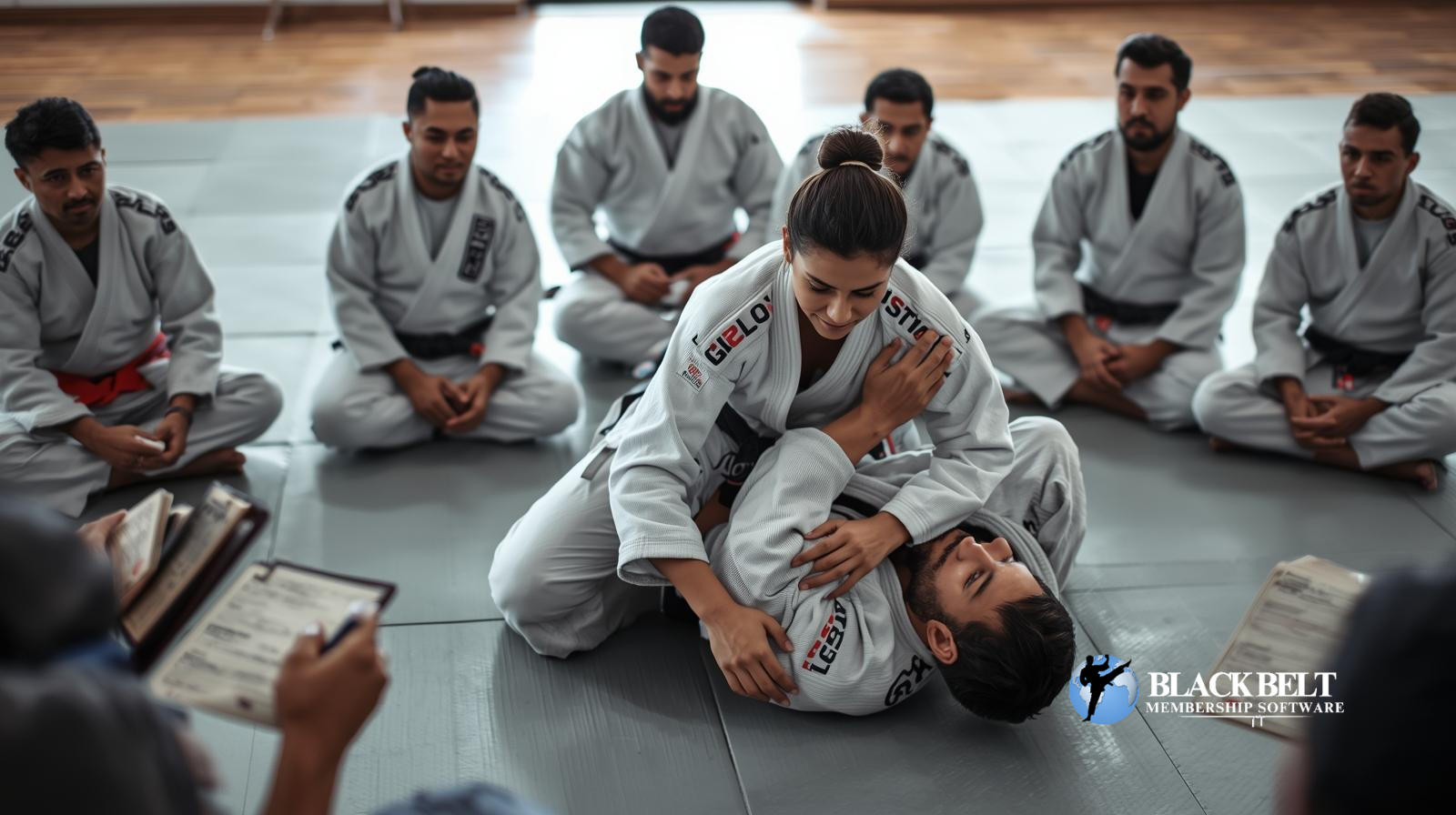
Additionally, a BJJ academy adopted weekly training labs. Coaches drilled specific sequences and class flow drills together. Standards became clear because the team trained side-by-side. The impact on culture and quality was immediate.
Culture acts as the glue that holds systems together. Without it, even strong processes break down. Multi-location leaders must anchor their training frameworks in tradition, etiquette, and discipline.
Judo and Aikido schools often excel in this area. Their structured bowing protocols. Class etiquette create a natural foundation for consistent behavior. Because tradition is central to their culture. Expectations carry across every school without constant oversight.
MMA and Boxing gyms have also evolved by adopting structured class formats. While their disciplines differ, systems and culture still support alignment.
Scaling requires discipline. Owners who maintain quality follow a set of proven steps.
Step 1: Build a unified training blueprint.
Document lesson plans, intro procedures, coaching cues, and safety standards.
Step 2: Train your trainers.
Leaders must model exact standards. When leaders drift, staff drift.
Step 3: Use simple reporting.
Weekly updates and KPI reviews keep performance visible and aligned.
Step 4: Reinforce expectations through mentorship.
Coaching outperforms correcting. Mentorship develops long-term capability.
Step 5: Protect your culture.
Tradition and etiquette act as stabilizers across all locations.
A Kung-Fu academy applied these steps across three locations. The structure remained consistent. Bow-ins, foundational principles, and technique sequences followed the same standard. Because culture supported the system, quality remained strong even as they grew.
Staff training across locations determines whether a school grows with consistency or suffers from fragmentation. Owners who rely on clear systems win. Owners who reinforce those systems through culture, mentorship, and structured rhythms win faster. Traditional values, operational clarity, and disciplined follow-through create predictable performance in every location. This is how multi-school leaders build long-term success.
Looking for dependable martial arts software to help you run your school more efficiently?
This article is brought to you by Black Belt Membership Software. A platform built to support your growth and simplify daily operations.
Schedule a quick demo or visit Black Belt Membership.
Weekly touchpoints and monthly deep-dive sessions provide the best balance. Weekly meetings keep teams aligned. Monthly sessions sharpen skills and reinforce standards. This cadence prevents drift and maintains predictable performance across all locations.
Yes. A unified structure creates consistency. Students know what to expect. Parents trust the process. Class flow, warm-ups, drills, and closing routines should match across sites. The content may adjust based on discipline, but the framework should stay uniform.
Use clear KPIs. Monitor class energy, parent engagement, intro conversions, and attendance follow-up. When KPIs dip, coaching should start immediately. Early intervention keeps quality from sliding and protects the brand.
A structured onboarding path. Shadowing. Co-teaching. Demonstration standards. Safety protocols. A fixed checklist gives new instructors clarity and removes guesswork. It also limits variation between locations.
Focus on teaching standards over style. Class control. Communication. Safety. Progression structure. Every discipline has different techniques, but quality instruction follows the same fundamentals.
Centralized leadership works best. Local teams can support training, but the standards must come from the top. When each location designs its own training, inconsistencies spread fast.
Lead with tradition. Bowing standards. Etiquette expectations. Class discipline. A strong cultural backbone keeps staff aligned even when leaders are not physically present.
Learning libraries, video reviews, KPI dashboards, and scheduling tools. Systems reduce friction. They help teams follow the same plan and protect operational discipline.
Develop internal coaches. Senior instructors can mentor junior instructors. Create a leadership pipeline. This spreads the workload and builds depth across all locations.
Assuming staff “get it” without reinforcement. Even good instructors drift without structured training. Successful operators never rely on memory. They rely on systems.
See how Black Belt Membership can assists you. To manager your growing martial arts business.